

the 70ies Dream of Synthesized Realism
Before digital sampling became ubiquitous, electronic musicians and instrument makers pursued a fascinating quest: to make synthesizers sound like real acoustic instruments — flutes, clarinets, oboes, brass and winds — using only oscillators, filters and envelopes. This was a bold creative and technical challenge that defined electronic music’s formative decades.
The Early Analog Era: Synthesis Meets Acoustic Imagination
Analog synthesizers — true tone generators built from voltage-controlled oscillators (VCOs), filters (VCFs), amplifiers (VCAs) and envelopes — emerged in the 1960s and 1970s as groundbreaking new musical instruments. These “modular” systems, patchable by hand and designed for experimentation, were used by avant-garde composers and pop innovators alike. (Encyclopedia Pub)
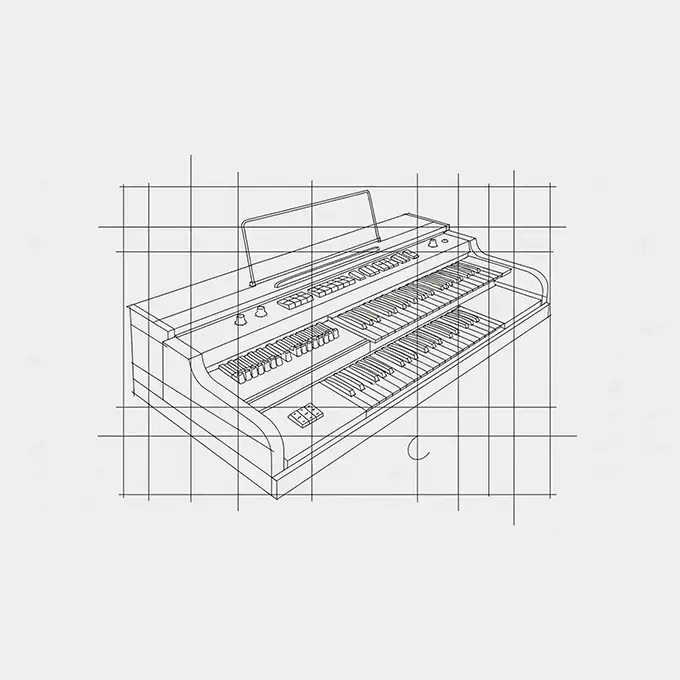 The very nature of subtractive synthesis, the dominant method in classic analog synth design, is to start with rich waveforms like sawtooth or square waves and then subtract frequencies via filtering to shape timbre. This approach could create expressive, dynamic sounds — but not true replicas of instruments such as clarinets or oboes. (Wikipedia)
Early analog synths were prized for their own voices — warm, quirky, alive with movement and character — but they were not built to faithfully mimic the complex acoustics of a woodwind or a string section. The physical behavior of breath-driven instruments involves subtle resonances, harmonic variations, and dynamic articulations that simple VCO-VCF designs could only approximate. Even skilled sound designers often described woodwind or brass patches as “suggestive” rather than convincing.
Introducing the Woodwindulator
The Woodwindulator by Wrongtools is a salute to those early, heroic attempts to make electricity feel organic. We didn’t want to record a real flute; we wanted to record the memory of a flute as heard through 1970s hardware.
 To give the sounds that specific 70s film score grit, we pushed the entire signal through a chain of beautiful, unstable gear:
- Tape Saturation: Recorded through Tape Machines to introduce that classic Wow and Flutter.
- Roland and Korg Tape Echoes: Using Delay effects to smear the edges of the sound.
- Mechanical Depth: Routed through Spring Reverbs and old Guitar Amplifiers to add proper air vibration.
This treatment:
- Captures the warmth and unpredictability of tape saturation
- Adds dimensionality through vintage effects
- Builds character that sits somewhere between acoustic and electronic — much like early synth experiments themselves
Woodwindulator celebrates the intersection of organic imagination and electronic artifice — paying homage to the spirit of early synthesis while offering playable, expressive woodwind-flavored sounds.
Woodwindulator revisits that philosophy with a modern lens: it captures the heritage of analog experimentation and translates it into a virtual instrument that feels alive, unpredictable and musically compelling.
An unusual approach to a synth library.
Instead of clean, digital waves, you get something that feels like it’s been sitting on a shelf in a dusty studio for forty years. For composers working on Scandi-noir, vintage documentaries, or avant-garde textures, it provides a sense of character that perfect samples simply cannot match.
Made for and with
- Platform: Native Instruments Kontakt (Full Version).
- Sound Source: Pure Analog Synthesis (re-imagining wind instruments).
- Processing: Analog Signal Processing, Tape, and Amps.
- Vibe: Nostalgic, unstable, organic, and deeply “wooden.”
What’s Inside the wwulator kontakt library:
- At a glance, Woodwindulator delivers:
- 71 patches of woodwind-like tones / timbres
- 2.89 GB of content.
- 1194 samples meticulously crafted from vintage gear.
- oh, and you’ll need the full retail version to run it.
Some patches are subtle and airy, others flute like, clarinet like or with a reed character, but all have an underlying warmth that stems from the deep analogue processing they’ve undergone.
What sets Woodwindulator apart
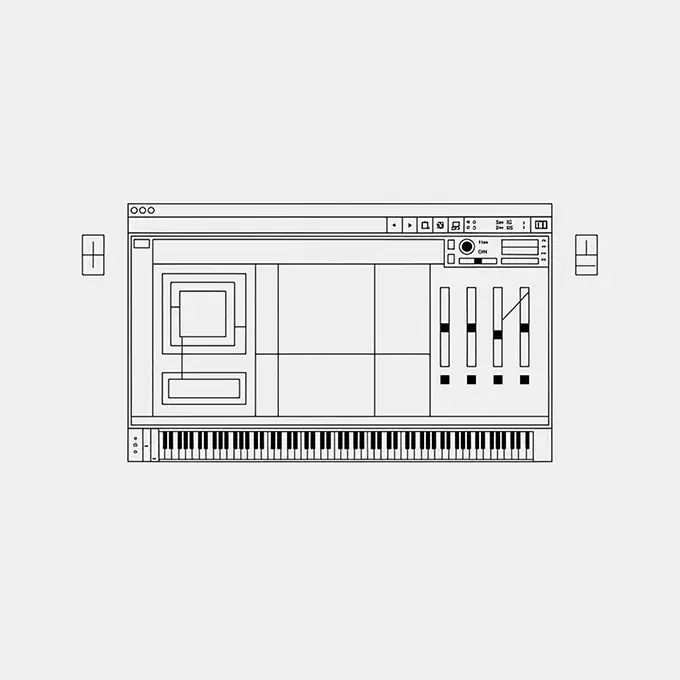 What sets Woodwindulator apart from other Kontakt instruments is its dedication to exploring the boundaries of both analogue synthesis and acoustic emulation. Instead of simply recording traditional woodwind sounds, Woodwindulator captures the essence of woodwinds through vintage synths and electronic circuits.
Hear it in action :
https://wrongtools.com/kontakt-instruments/woodwindulator/
Updating…