
press Enter to searchSearch results:No products found.
A Piano Alternative
The Acoustic Antidote
A Study in High-Fidelity Intimacy and the Physics of Tuning Fork Resonators
A Technical Evaluation of the Wrongtools Dulcitone Pro
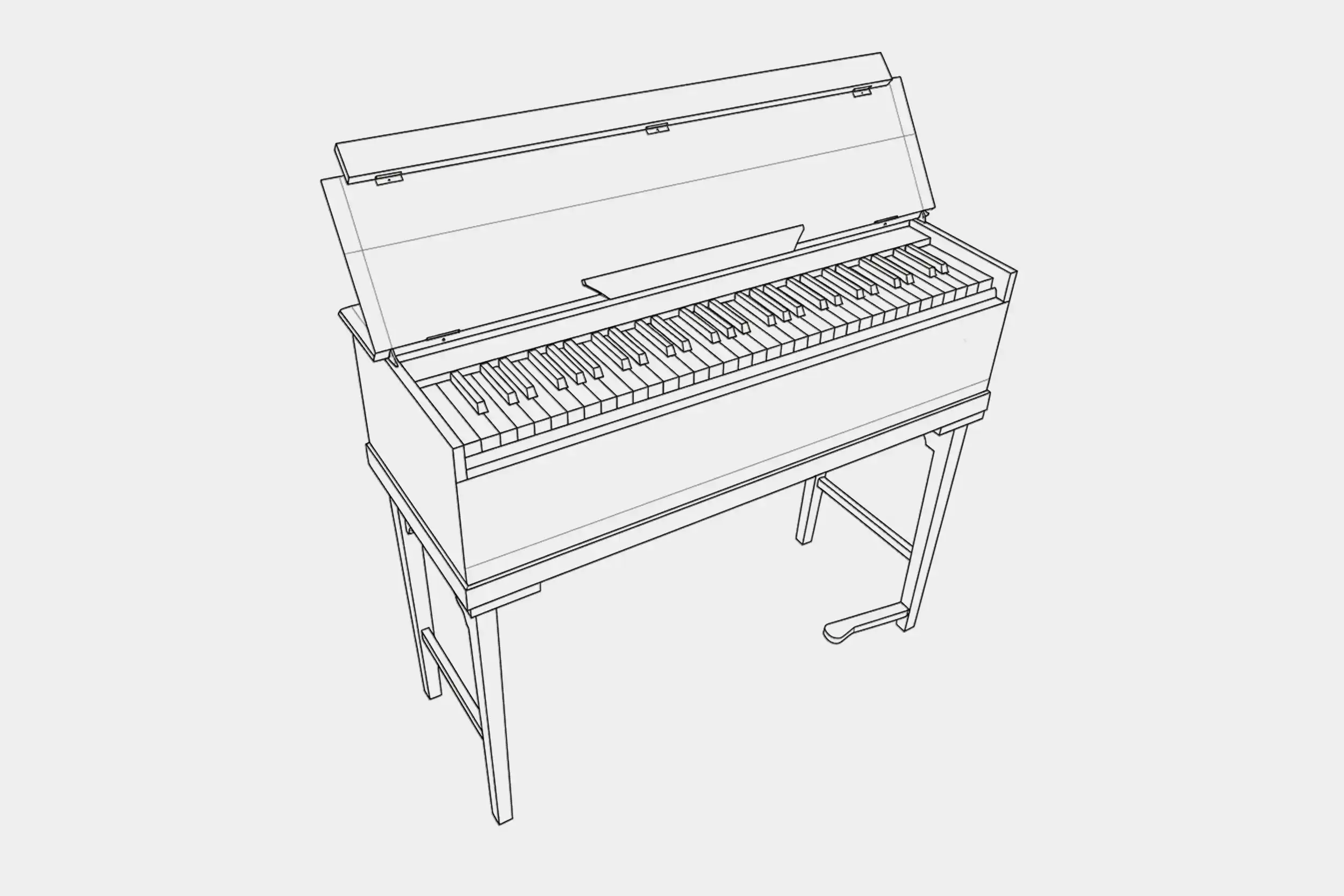
In the production landscape of 2026, the industry has largely pivoted away from the “maximalist” sample libraries of the early 2020s. As high-resolution delivery and immersive audio workflows become the baseline for streaming platforms, composers are increasingly seeking instruments that offer a specific frequency niche rather than sheer power. The Wrongtools Dulcitone Pro addresses this shift, documenting a rare 19th-century Dulcitone—a keyboard that replaces traditional piano strings with a series of struck tuning forks.
For many contemporary scores, a grand piano can be sonically obstructive. The high-tension strings and massive soundboard create a complex harmonic series and a percussive “knock” that often competes with dialogue or dense synth layers.
The Dulcitone Pro serves as a professional alternative to the piano, offering a soft, contemplating tone. Because the source of the sound is a metal fork rather than a string, the transient is rounded and the harmonic decay is exceptionally pure. This makes it an ideal film scoring tool for “quiet” cinema, where the goal is emotional resonance without frequency clutter.
Engine Design
Wrongtools has approached the sampling process with a focus on mechanical honesty. The library does not attempt to “clean up” the instrument; instead, it captures the idiosyncratic clatter of the Victorian-era action, which provides a sense of physical presence in a digital mix.
Sample Resolution: 24-bit / 96kHz NCW (Lossless).
Format: Native Instruments Kontakt 6+++ (Full), featuring scripted NKS integration.
Dynamic Range: Up to 12 velocity layers.
The Engine: A next-gen sample engine featuring an XY-morphing pad. This allows for seamless transitions between the raw acoustic capture and “Resonator” layers—processed signals that extend the natural decay of the forks into ambient textures.
Workflow Integration
Modern MIDI orchestration tools must be optimized for the high-track-count demands of Dolby Atmos mixing. The Dulcitone Pro is technically disciplined:
Frequency Precision: The instrument’s energy is concentrated in the 500Hz to 4kHz range. It lacks the “muddy” low-mid build-up of a piano, allowing it to sit in a mix with minimal EQ intervention.
Immersive Versatility: The multi-mic setup allows composers to pull the “Internal” mic for a dry, centered mono sound, or push the “Room” mics to fill the height channels in a surround bed.
CPU Efficiency: Despite the high sample rate, the library is optimized for low RAM usage, ensuring stability in complex scoring templates.
Why the "Wrongtools-Dulcitone Pro" Stands Out
While there are numerous Kontakt orchestral tools that provide mallet percussion or celestas, the Dulcitone Pro occupies a unique space between a woodwind and a keyboard. It provides the “human” imperfection required to bridge the gap between organic and synthetic elements in hybrid sound design.
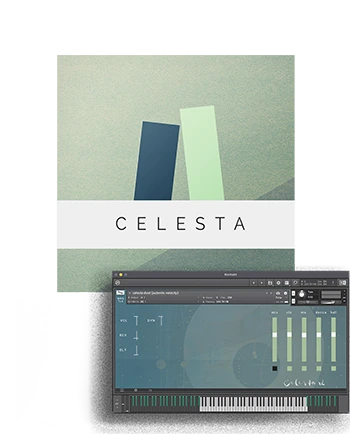
Unlike a celesta, which has a bright, metallic “ping,” the Dulcitone Pro is muted and earthy. It is an objective success for producers who require cutting-edge virtual instruments that prioritize character and stillness over generic versatility.
All major DAWs (Logic Pro, Cubase, Ableton, Pro Tools through Kontakt)
Dulcitone
Pro
The Wrongtools Dulcitone Pro is a specialized, high-fidelity instrument for the modern era. By focusing on the contemplative physics of the tuning fork, it provides a level of intimacy that makes it a candidate for the best cinematic sample library 2026 has to offer in the textural-melodic category.
Wrongtools synth-based sample libraries often involve re-amping synthesizers through guitar amps, rotary speakers like Leslies, telephones, radios, old speakers, and other unconventional devices. You’ll also find a section of this within the Dulcitone-Pro library
This introduces a unique sonic signature, full of color, noise, and distortion that would be impossible—or at least extremely complex—to replicate with plugins alone.
By doing this, Wrongtools not only captures the sound of the original synths, but also infuses them with new life through texture, room tone, and nonlinearities from the hardware signal chain.
This makes Wrgtls instruments especially inspiring for film scoring, sound design, and character-rich electronic music production. And easy to mix in with other instruments.