




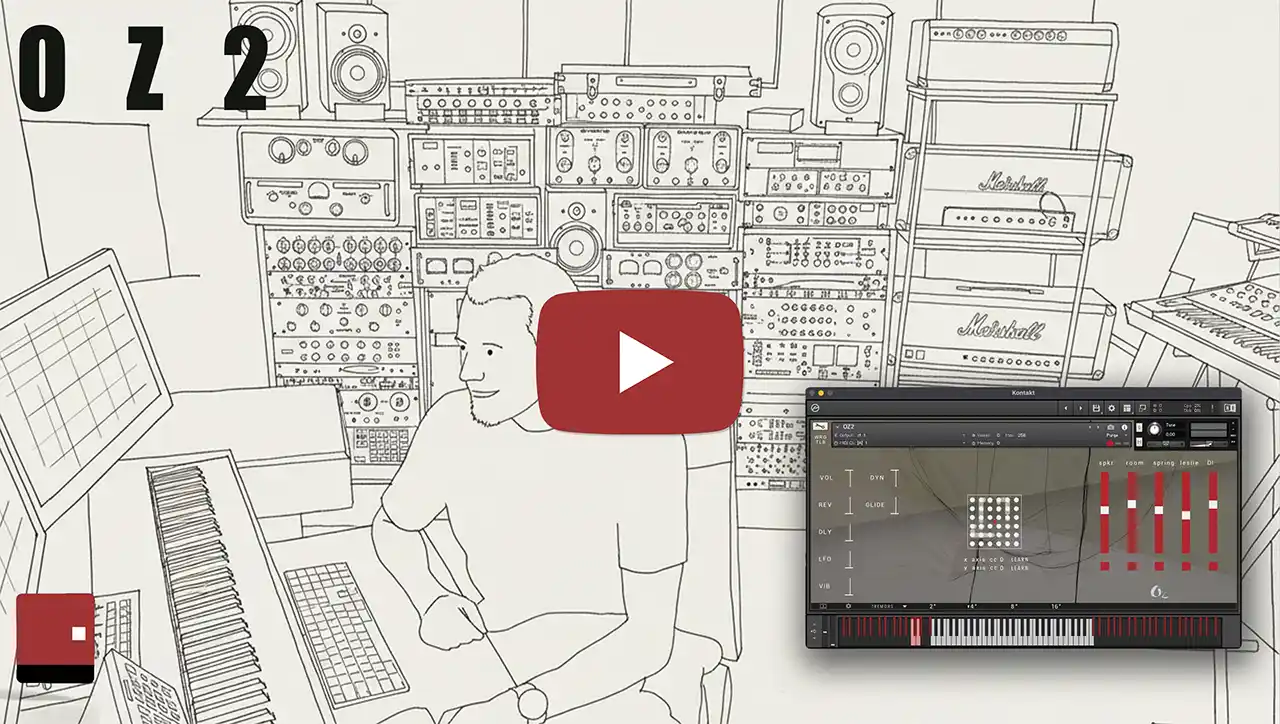



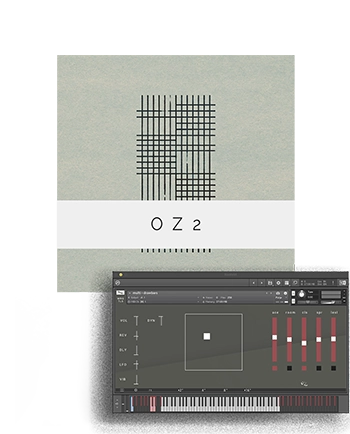
OZ (now: version2) is a massive Organ Kontakt sample library, with some very special sounding treatments.
This library includes so much. Soooo many cool organ sounds!!
and you’ll also find upto 5 signals in each patch : internal speaker, room captured with external amp, stereo spring reverb, mini-leslie & direct signal.
As well as a collection of in-built IRs
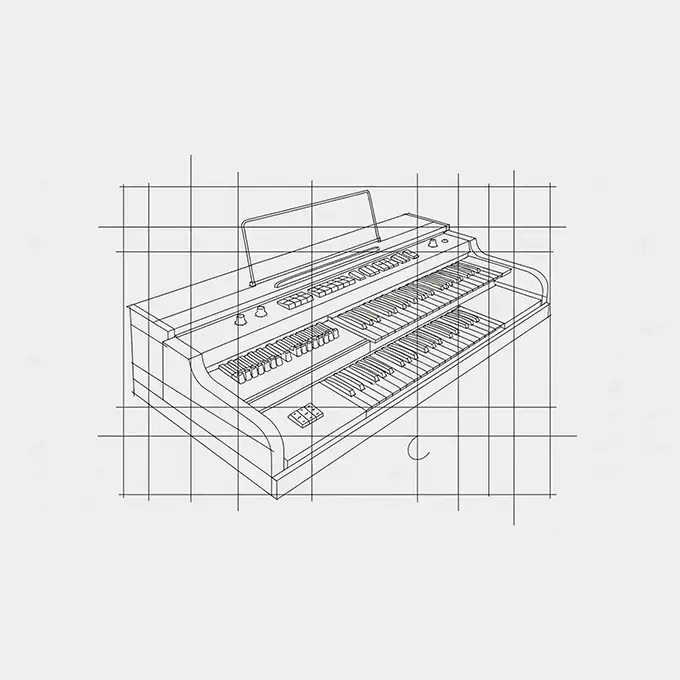
The sampled organ is the Ace Tone GT7 —the DNA of what would eventually become Roland—reimagined through the Wrongtools lens. We’ve stripped away the dry technicalities to focus on the mechanical lineage, the odd re-badging mysteries, and the “beautifully wrong” history that birthed our OZ library.
The library is broadly divided into two main parts:
“Normal” Patches: These are the more authentic organ sounds, often featuring the ability to blend the 5 distinct microphone/line signals. They aim to capture the raw character of the Acetone GT-7.
“Reception” / “Tainted” Patches: These are the heavily processed and sound-designed versions, utilizing external effects, tape echoes, modular boxes, and various amps to create unique, sometimes distorted, ambient, or rhythmic textures. You will no longer think of these as “organs”.
This is a very colorful library, with endless possibilities in terms of combining and tweaking the sounds. It ranges from pretty normal tonewheel organ, to stuff that is so far off the beaten patch that it growls.
Our 130 patches cover a massive range of textures—from the “excellent vibrato” that Ace Tone was famous for,
you’ll also find and advanced XY-Pad Morphing
Unique to Wrongtools, our custom XY-Pad allows you to morph between different tonal states in real-time, creating evolving textures that are impossible to achieve on a real organ.
Yes! Connect your midi keyboard to a laptop, and off you go!
Absolutely. Most parameters on the OZ interface can be automated within your Digital Audio Workstation (DAW) using MIDI CCs. The easiest way to assign a controller is often by right-clicking a knob or slider and selecting “Learn MIDI CC Automation,” then moving a physical controller on your keyboard or MIDI device.
Ace Tone (officially Ace Electronic Industries) was the brainchild of Ikutaro Kakehashi, the visionary who later founded Roland. Established in Osaka in 1960, Ace Tone was the laboratory where Kakehashi refined the transistor technologies that would eventually change the world. In a sense, Ace Tone is the raw, boutique ancestor of the Roland empire—the “pre-history” of Japanese synthesis.
It’s a bit of a historical “chicken or the egg” situation. While many see the Ace Tone GT-7 as a clone of the Hammond X-5, the truth is more interesting. Kakehashi founded Hammond Japan as a joint venture in 1968. Records suggest the GT-7 actually hit the market years before the Hammond X-5. So, in a delightful twist of boutique irony, the “copy” might actually be the original. We’ve captured that specific, slightly-off-center character in our 130 patches.
A TOP-1 Ace famously appears in a surreal “Japanese hoedown” scene in Godzilla and the Smog Monster, and eagle-eyed gear hunters have spotted its unmistakable silhouette in the living room of Alex DeLarge in A Clockwork Orange.
 Kontakt is a powerful software sampler developed by Native Instruments. It’s an indispensable tool for composers due to its versatility, allowing you to load and play thousands of high-quality sample libraries ranging from orchestral instruments and world instruments to cutting-edge synths and sound design tools. Its deep editing capabilities, extensive scripting engine, and robust performance optimization make it ideal for crafting realistic mock-ups, complex soundscapes, and intricate scores in professional music production environments.
Since Wrongtools is continuously improving and working on their libraries, they have an Online User Handbook. To have it online, makes it easier to update.
Wrongtools libraries requires the full version of Full Retail Version of Kontakt 6.4.2 [or later]. It will not run in the free Kontakt Player. If you’re unsure about compatibility, see our general Kontakt compatibility guide.
Kontakt Player is a free, limited version designed to run “Player-compatible” sample libraries, which are specifically licensed by Native Instruments for use with the free player. These libraries typically appear in Kontakt’s “Libraries” tab and often require serial number activation via Native Access. Wrongtools libraries will need the paid “full” version.
It will take up 5.5 GB of your diskspace
-


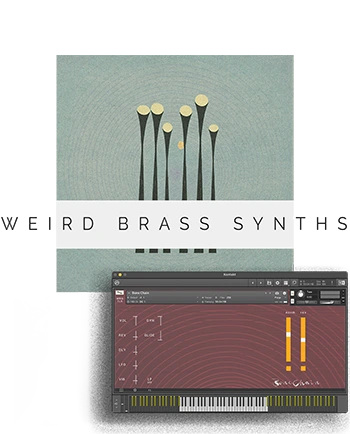
Bone Chain
€38 -
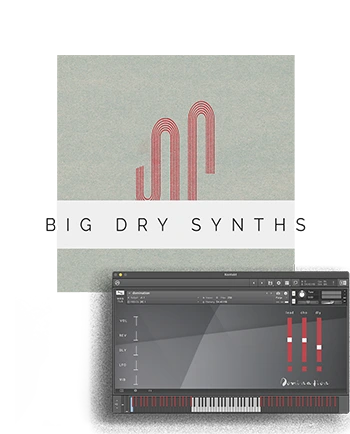
Domination
€38 -
Overvoltage
€38 -
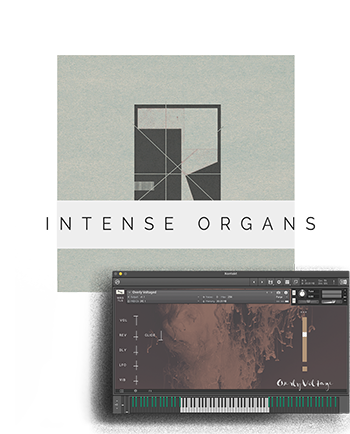
OZ2 ● organ
€49 -
Soloist
€29 -
ww-ulator
€39


Updating…