





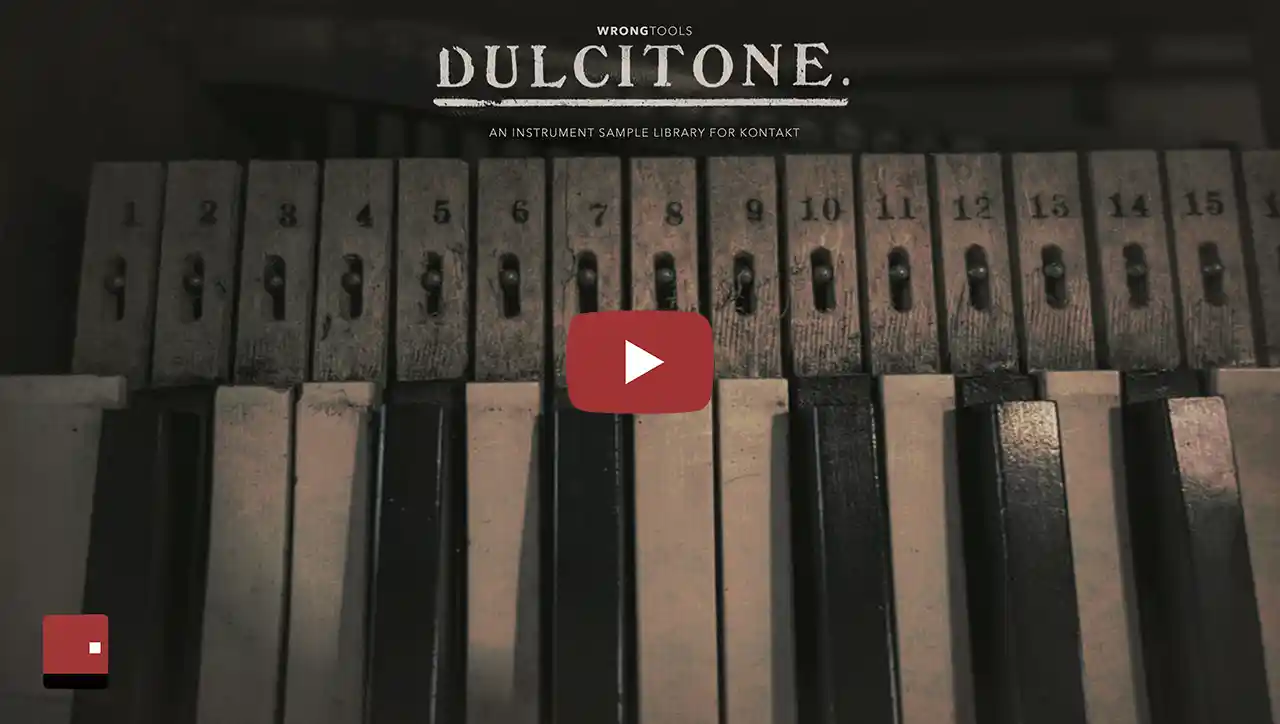



Dulcitone Pro is a cinematic Dulcitone and felt piano Kontakt library created for film scoring, game composers, ambient music, soundtrack production, modern classical composition and experimental sound design. Explore rare keyboard samples, felt hammer textures, organic acoustic instruments, delicate cinematic sounds and creative virtual instruments for Kontakt.
 IT FEATURES:
• Fully restored Dulcitone instrument
• Sampled with new sets of piano felt hammers
• Multiple articulations and Sound-shaping tools
• 44 patches (plus sound design variations)
• 1577 samples
• 3.46 GB
• Felt Dulcitone piano singlenotes and ‘tone-rivers’
• Organic mechanical character
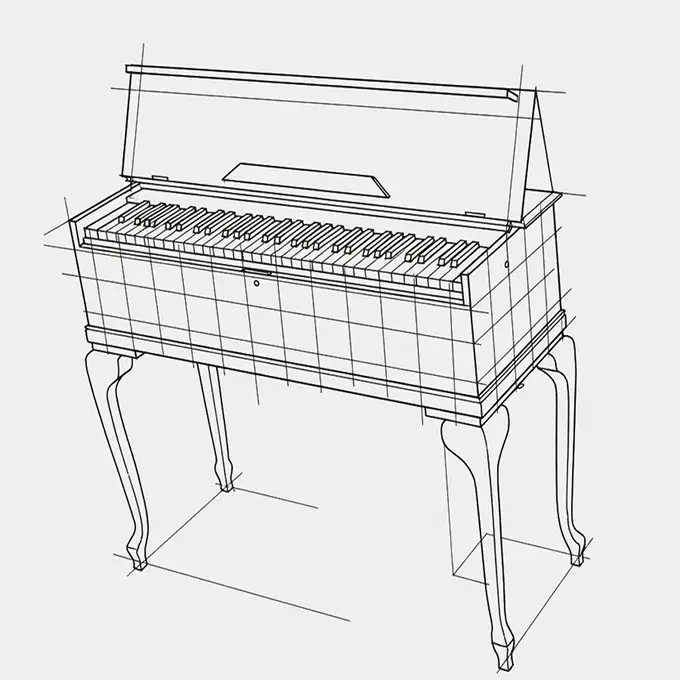
The Dulcitone is a keyboard instrument invented by Thomas Machell of Glasgow, Scotland, in the 1860s. Classified as an idiophone with percussion plaques (similar to a metallophone), it’s often referred to as a “tuning fork piano.” Its sound is produced by felt-covered hammers striking a series of tuned steel tuning forks, which then resonate through a spruce or pine soundboard. The instrument was manufactured by Machell’s firm, Thomas Machell & Sons, from the 1880s until the late 1920s or early 1930s.
The Dulcitone Pro library for Kontakt is the most comprehensive sample collection of this instrument.
The Dulcitone’s mechanism is a simplified version of a grand piano’s “down-striking” action, with the hammers positioned above the tuning forks. When a key is pressed, it activates a hammer, which strikes a tuning fork. The tuning forks are U-shaped pieces of metal, varying in length to produce different pitches. The instrument’s action includes a damper system; pressing a key lifts a damper from the tuning fork, allowing the note to sustain. A sustain pedal, attached to one of the front legs, lifts all the dampers simultaneously. The forks are acoustically coupled to a soundboard, which amplifies the sound. The instrument’s internal construction is primarily wood, with keys often made of ivory and ebony.
With the Kontakt library Dulcitone Pro, musicians and composers finally have access to the most comprehensive and sonically rich sample library of this unique instrument. Every key has been recorded with a variety of velocities and round robins, ensuring a lifelike performance. The inclusion of subtle mechanical noises and room ambience further immerses the user in the authentic experience of playing a real dulcitone.
The Dulcitone is known for its quiet, soft, and mellow sound. The sound is also said to have a “woody, clonky glockenspiel/celesta” quality. Its limited volume made it suitable for intimate settings, such as homes and small churches, but it was often too quiet for larger concert halls. Which makes it a perfect project for deep sampling for Kontakt. The Dulcitone Pro Kontakt library stands as the most thorough and detailed sampling of its kind.
Yes, the Dulcitone is considered an ancestor of the celesta, which uses metal plates instead of tuning forks, and the Rhodes piano, which also uses hammer-struck pronged forks, but is an electric instrument intended for amplification. The Dulcitone was developed around the same time as the Typophone, another tuning-fork instrument invented by Victor Mustel.
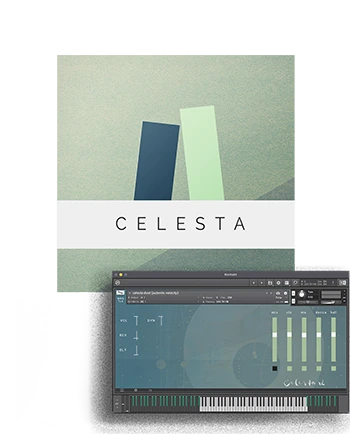
Wrongtools also has released a celesta sample library featuring two celestas.
The Dulcitone was originally marketed to a specific customer base: missionaries. They needed a portable, low-maintenance keyboard instrument to bring with them to remote areas for church services. It also found use in homes for quiet, domestic music. Composers such as Vincent d’Indy (Song of the Bells, 1888) and Percy Grainger (“The Power of Rome and the Christian Heart,” 1943) scored for the instrument, although Tchaikovsky famously considered it for The Nutcracker but ultimately opted for the louder celesta. More recently, musicians like David Rhodes and Jon Brion have used it in their recordings and film scores.
When it comes to sampling the dulcitone, the Kontakt library Dulcitone Pro is in a class of its own. The library was recorded with new sets piano-felt hammers, and soft rubberball- mallets, and different mallets carefully hit each of the tines. We recorded a range of velocity layers and round robins to ensure that the subtle dynamic variations and unique character of the instrument were preserved in the library.
DulcitonePro requires the full version of Full Retail Version of Kontakt 6.4.2 [or later]. It will not run in the free Kontakt Player. If you’re unsure about compatibility, see our general Kontakt compatibility guide.
DULCITONE PRO ::: Restored Dulcitone
Category: acoustic keyboard / tuned percussion / dulcitone
Best for: intimate film scoring, delicate melodies, contemporary classical, understated underscore, soft keyboard textures
Character: delicate, quiet, soft, warm, controlled, cinematic
Number of instrument patches: 44 + 24 variations
Size: 3.3 GB
Recorded: A restored rare Dulcitone performed with piano-felt hammers and a range of alternative mallets
Related products: Celesta Duet, Bell-tone Piano, Fingerimba, Putty Grand
Wrongtools creates Kontakt instruments by searching for sounds with personality. Those big, small, weird and wonderful moments of sound that give music its flavour. Our approach is both conceptual and intuitive & combining deep sampling, acoustic exploration, experimental recording methods, and a love for instruments that do not behave exactly as expected.
Our sounds have found their way from our small workshop into Oscar-nominated films, major cinematic productions, internationally known games, and television series around the world.
-


Bell-tone piano
€28 -
Celesta Duet
€28 -
Dulcitone Pro
€48 -
The Silk Rhodes
€28 -
Pianesque
€54 -
Mule Piano
€78 -
Vinyl Piano
€38 -
Pianotron
€28 -
Putty Grand
€78


Updating…